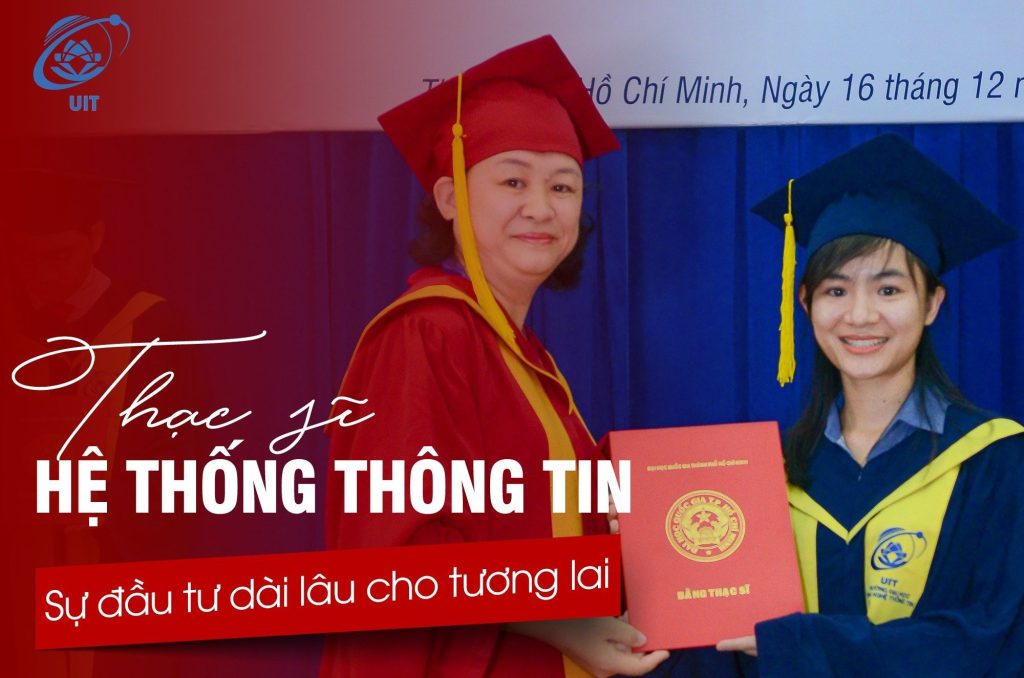
CHÚC MỪNG HỌC VIÊN CAO HỌC NGÀNH HỆ THỐNG THÔNG TIN CÓ BÀI BÁO ĐƯỢC CHẤP NHẬN TẠI HỘI NGHỊ QUỐC TẾ CSONET 2026
The 15th International Conference on Computational Science and Network Intelligence (CSoNet 2026) là Hội nghị quốc tế lần thứ 15 về khoa học tính toán và trí tuệ mạng, tiếp nối chuỗi hội nghị CSoNet với định hướng nghiên cứu về mạng, dữ liệu và các phương pháp tính toán. Từ phiên bản thứ 15, hội nghị mở rộng phạm vi nghiên cứu sang network learning và structure-aware AI, hướng đến các nghiên cứu về nền tảng lý thuyết, phương pháp luận và ứng dụng thực tiễn của trí tuệ tính toán trong các hệ thống và mạng hiện đại. CSoNet 2026 dự kiến được tổ chức từ ngày 16 – 18/11/2026 tại Trường Đại học Bách khoa – ĐHQG-HCM (HCMUT), TP. Hồ Chí Minh, Việt Nam. Hội nghị thuộc danh mục Scopus, ISSN 2615-9872 và được xuất bản bởi Springer Nature.
Thông tin chi tiết về hội nghị có thể tham khảo tại: https://csonet-conf.github.io/csonet26/index.html
Tên bài báo: “VN-MultiXR: A Fusion-Based Multimodal Deep Learning Framework for X-Ray Diagnosis and Vietnamese Report Generation”
Học viên thực hiện:
- Thái Thị Thanh Nga – MSHV: 240104042 – Ngành HTTT Khóa 2024 (K19.2)
Giảng viên hướng dẫn: PGS. TS. Nguyễn Đình Thuân, NSC. ThS. Đỗ Duy Thanh
Abstract: X-ray interpretation plays a critical role in diagnosing thoracic and musculoskeletal diseases, yet existing multimodal diagnostic systems are largely English-centric and restricted to chest radiographs, leaving Vietnamese clinical data underexplored. To address this gap, we propose VN-MultiXR, a multimodal deep learning framework that jointly exploits radiographic images, Vietnamese clinical indications, and patient demographic information. The architecture integrates Swin Transformer, PhoBERT, and a Multilayer Perceptron through an intermediate fusion strategy with a two-layer Transformer Encoder, and simultaneously performs multi-label pathology classification, Vietnamese radiology report generation, and weakly supervised lesion localization via Grad-CAM. We construct a real-world dataset of 33,795 radiographs from 17,791 clinical examinations covering the chest, spine, skull, limbs, and ribs, collected at a Vietnamese grassroots healthcare facility. On the independent test set, VN-MultiXR classifies nine pathology categories with a Macro-average AUC of 93.55%, outperforming the reimplemented TriMF baseline at 80.70%, and generates Vietnamese reports with BLEU-1 and BLEU-4 scores of 0.5521 and 0.3822, respectively, and a BERTScore F1 of 0.7499. Ablation experiments show that Vietnamese clinical text provides the largest contribution among the three modalities. These results indicate that VN-MultiXR is a promising solution for computer-aided diagnosis in Vietnamese grassroots healthcare facilities and other resource-constrained clinical environments.